This is an illustration by Brian Bolland from 1988 for USA Magazine. This would have been the same year that The Killing Joke was published.

Thanks to Colin Smith for sharing this image!

This is an illustration by Brian Bolland from 1988 for USA Magazine. This would have been the same year that The Killing Joke was published.
Thanks to Colin Smith for sharing this image!



The Spirit is one of my favorite characters and I love seeing different artists do their take on the character. A while back, I showed a cool Neal Adams illustration, but here is another one by Brian Bolland that captures the essence of Eisner. Denny Colt is captured, bound, but he isn’t treated too badly by his femme fatale captor, P’Gell.
I saved this scan back in 2002, when it first appeared as the cover to Kitchen Sink’s Will Eisner Spirit, The New Adventures #3. This series allowed other creators to write/draw the Spirit, including Alan Moore, who did a wonderful story in both the first and third issues. Nuff Said!
Long ago, government man Steve Trevor crashed onto Wonder Woman’s island and brought her back to New York, but now they’ve split up. She still loves him, though, and it’s obvious that their relationship is going to be a focus.Very troubling. Wonder Woman should be about independence and self-reliance, not pining away after Steve Trevor, who hasn’t been featured at all in the comics for over a decade. Nuff Said!
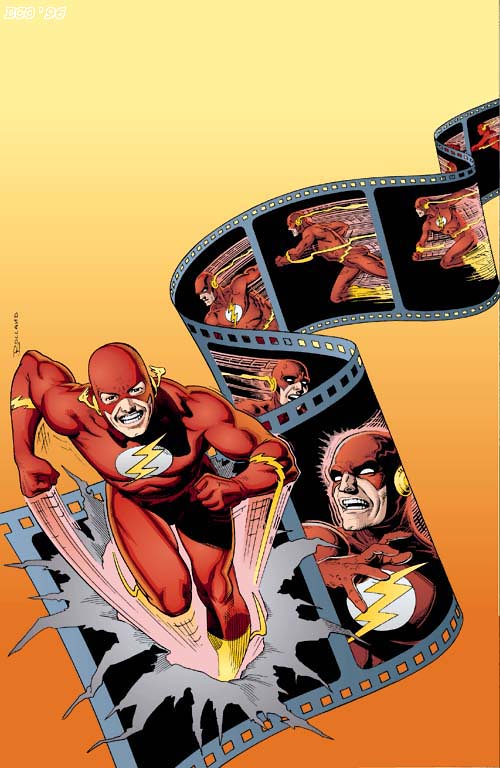
In releasing those DC Comics wallpapers for the Sony & Amazon readers, I realized that I had these great Flash cover scans by Brian Bolland. I had saved the versions sans any cover copy and I think they all look spectacular. The one above is Bolland’s re-take on the classic Showcase #4 cover, the first appearance of the Silver Age Flash. This cover was on the The Return of Barry Allen trade paperback.
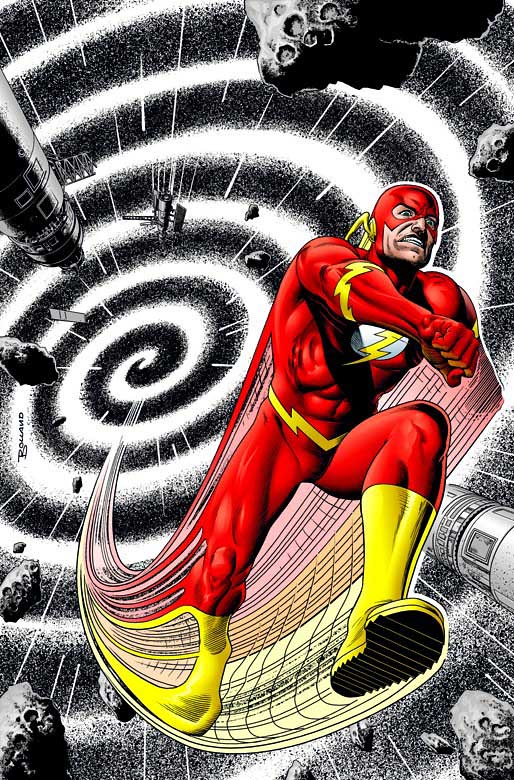
Flash 177 from 2008 asked the question, Can Even the Flash Outrun a Black Hole? This concept just gave Bolland a license to do his trippy magic here. The design is just great, with the black and white background making the Flash pop out even more in the foreground.
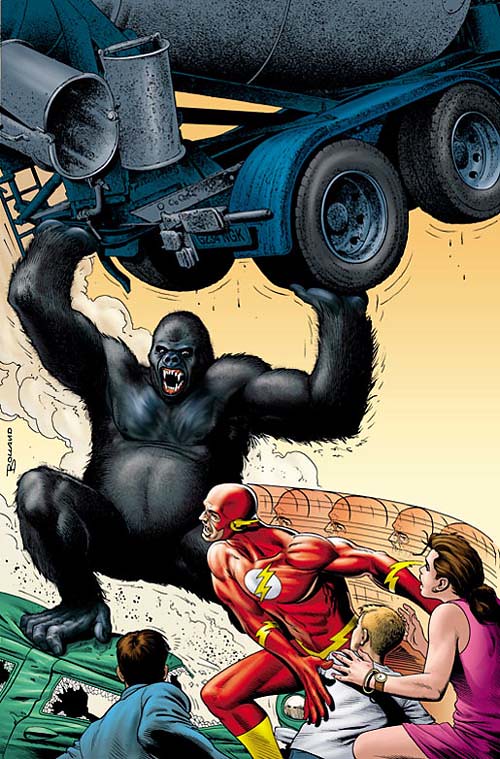
Flash 178 featured the return of Gorilla Grodd, who mounted an amazing attack on the Flash in his own city.
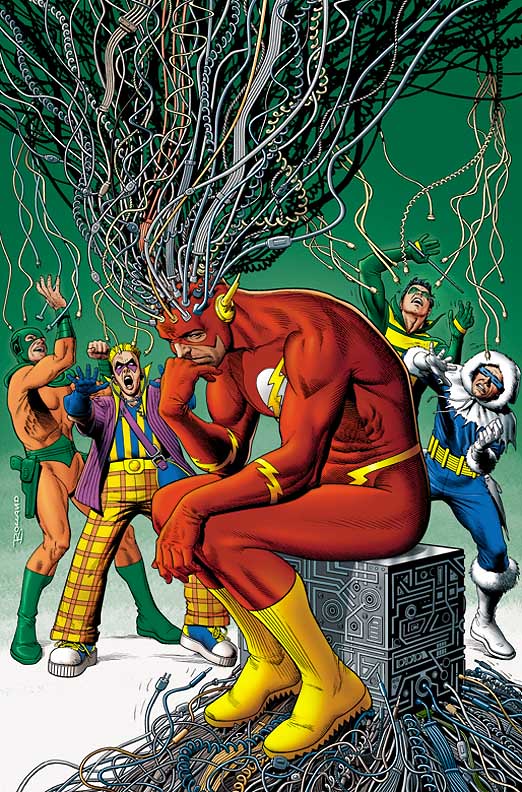
Flash 186 featured Bolland’s re-take on the classic statue The Thinker by Rodin, while The Rogues look on in terror as he merges his super-fast mind with an artificial intelligence to save Keystone and Central City.
There are many more Bolland Flash covers, which ones are your favorites? Nuff Said!
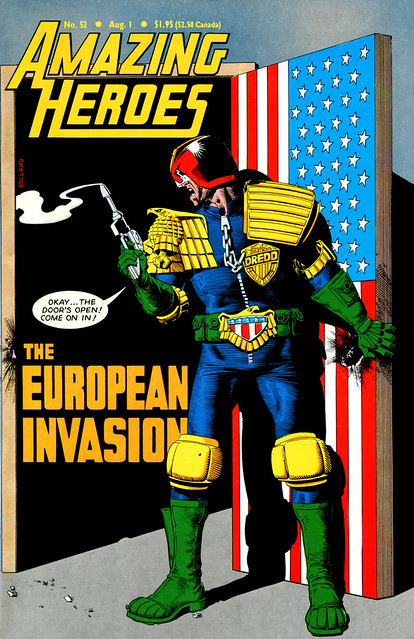
DC Comics brought in a number of great creators from the United Kingdom, starting in 1984, and if you had read any imported comics like 2000 A.D. or Warrior magazine, you were eagerly anticipating their work on mainstream DC heroes. If it was not obvious what was happening, this cover by Brian Bolland on Amazing Heroes #52 made it very clear. Judge Dredd, the character who had cracked the American market with superb artwork by Bolland and others, had opened the door for other creators from the UK.
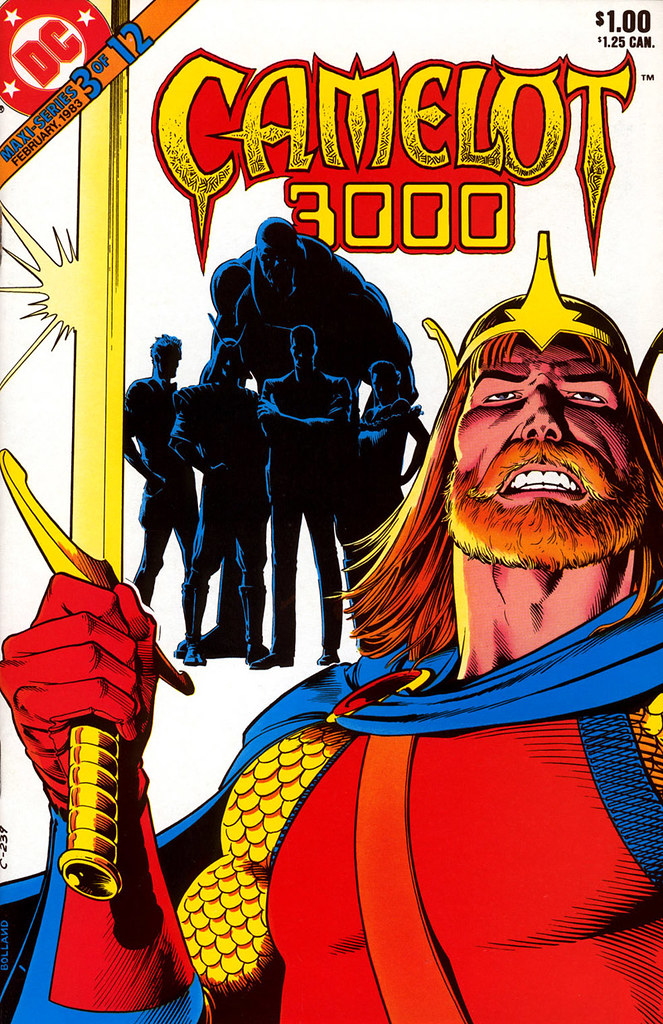
Bolland was almost finished with Camelot 3000 by the time that Amazing Heroes cover was published. Eleven stellar issues had been published—though we would have to wait about a year for the final issue (#12) to finally appear in 1985.
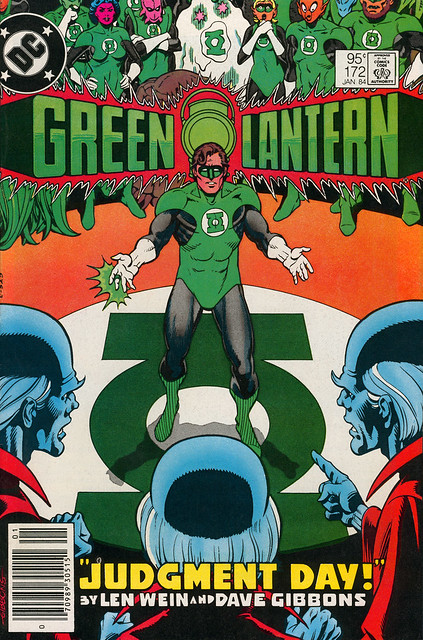
Dave Gibbons became the regular artist on Green Lantern in 1984, joining writer Len Wein for a series of stories that would see John Stewart take over as Earth’s Green Lantern for a while.
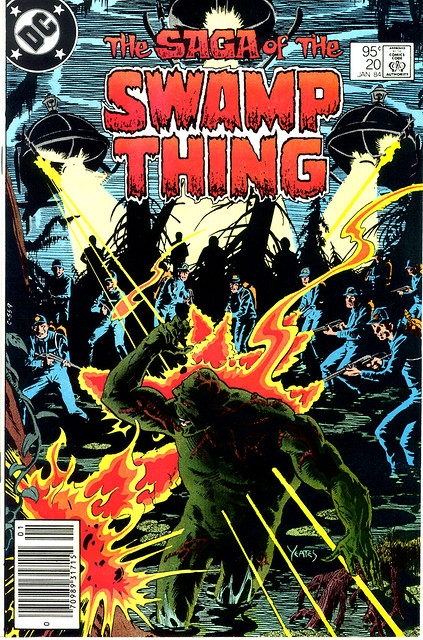
Alan Moore’s first issue of Swamp Thing was cover dated January 1984, meaning that it probably appeared in stores around Oct-Nov 1983. I remember picking up this issue, without having read any of Moore’s previous work, but willing to give him a chance. I thought it was a very good story and showed a lot of promise. My jaw would drop to the ground when I read the next issue (#21) which contained The Anatomy Lesson. That one prompted me to buy anything and everything written by Moore, including the Warrior magazines with the Marvelman & V for Vendetta stories.
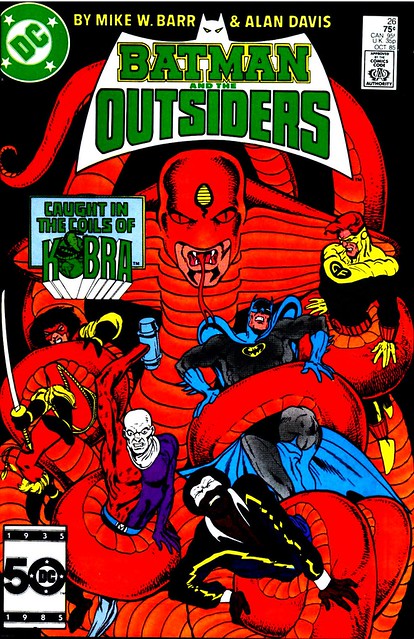
Alan Davis joined a bit later, in 1985, when his stint began on Batman & The Outsiders. I enjoyed his work on this title, although when I re-read these issues now, his style was a bit rough and his storytelling was yet as “epic” as it would become in later years.
Later in 1988, we got a second wave of creators from the UK. Jamie Delano started on Hellblazer #1, along with John Ridgway. Neil Gaiman and Dave McKean’s Black Orchid mini-series was also published in 1988. It was a revolutionary period for comics fans! Nuff Said.

Brian Bolland drew the best Black Canary cover in 1988, for Action Comics #609! This was during the period when DC had booted Superman out of the title and made it an anthology starring various characters that did not have their own series.
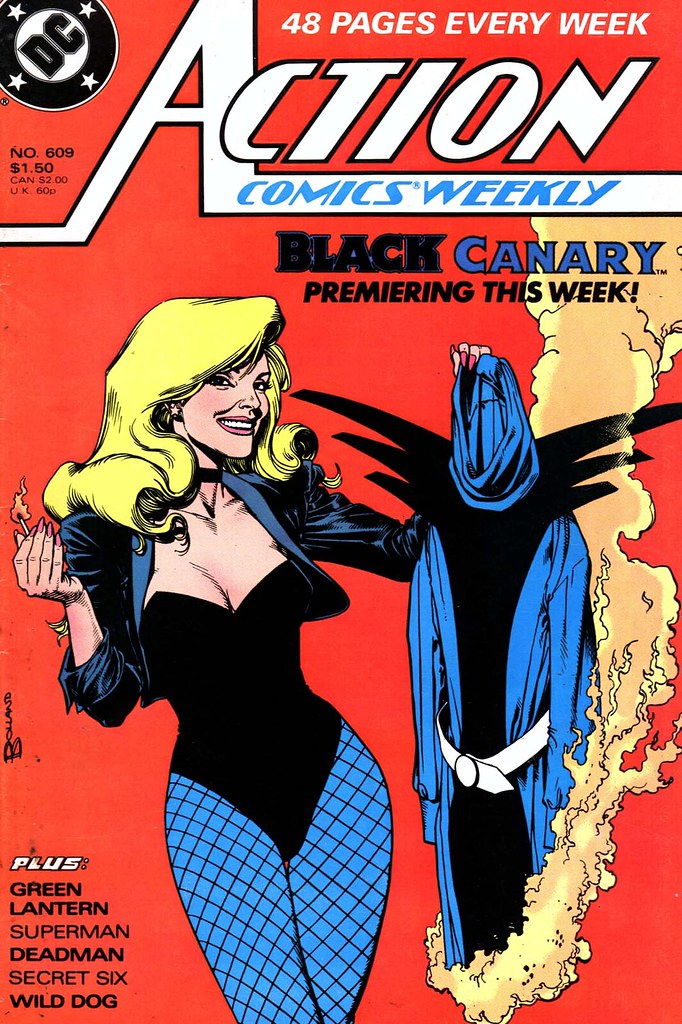
Bolland's cover is just wicked. Black Canary gives a mischievous smile to the viewer as she burns her 1980s Justice League era outfit. Bolland is giving a gift to the fans: the return to the classic costume and fishnets! I was happy to see the Black Canary's original outfit--I always think she should be drawn in this one.
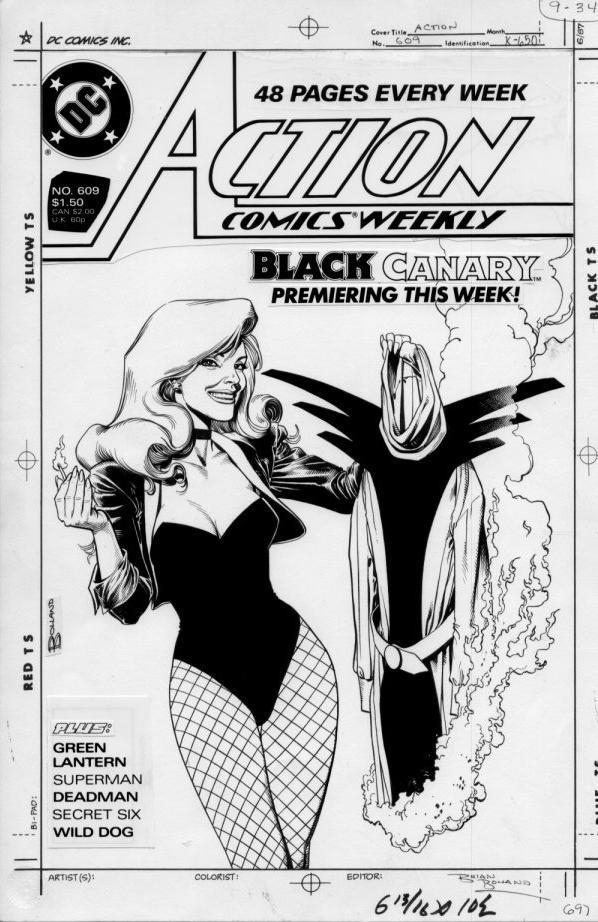
Here is the original art for Action Comics 609. It looks just as good, if not better, in black and white. This piece is owned by Joseph Melchior, see his gallery at Comic Art Fans. Nuff said.
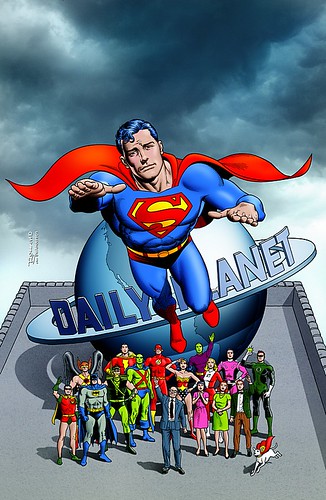

On July 4th, I posted a Steranko page from Superman #400. There were a number of great artists that editor Julie Schwartz snagged for drawing pin-ups in this landmark 1984 issue. Here are just a few of them...
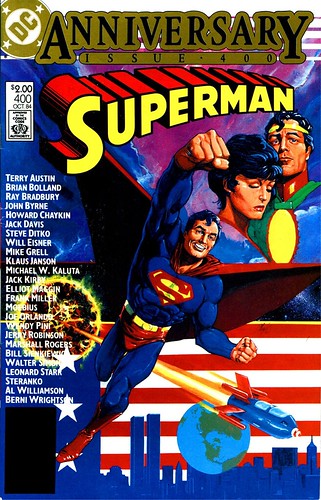
Howard Chaykin painted a wonderful cover with all the classic elements of Superman's origin.
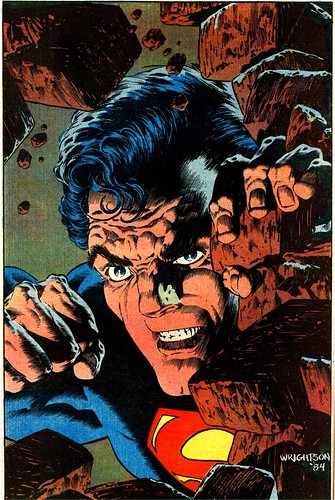
Here's probably my favorite and most off-beat pinup, by Berni Wrightson. I always wanted to see Wrightson tackle Superman. I think he did a wonderful job by focusing on Kal-El's face here.
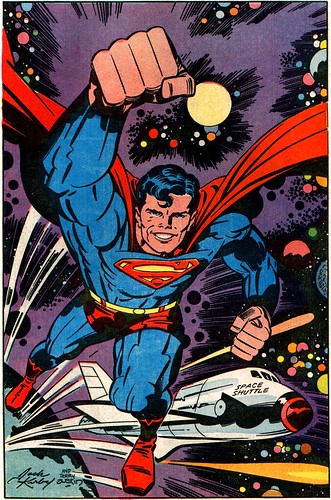
Jack Kirby provided a nice Superman illustration--inked by Terry Austin.
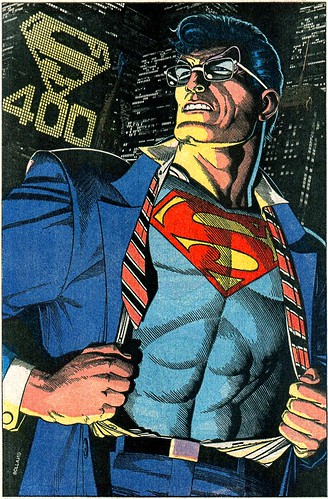
Brian Bolland's pinup freeze frame's another famous Superman motif--taking off his business man uniform to reveal the S emblem.
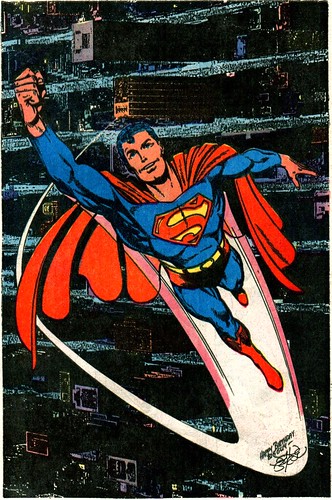
John Byrne, a Marvel creator, was even allowed to draw this pinup of his favorite character. This was a portent of things to come--Byrne would take over Superman just two years later in 1986 with the Man of Steel limited series!
You can see a few more pinups on my Flickr Superman set. You can also read the story behind Superman 400, plus a number of full story pages, at superman.nu. I am amazed at how many websites/blogs actually repost full scans of every single page of comics. Nuff said.
